The “Scattered” Site Model: a History

Opinion: YET ANOTHER TASK FORCE?? AYFKM?!?

500+ articles on homelessness in Portland and Maine

Shelter 2.0 – A little planning makes a lot of difference

Shelter Policy Resolution Support Letter

BNA supports Bayside shelter moratorium

An Absence of Equity – It Takes A Bigger Village

BNA Opposes New Preble Street Shelters in Bayside

Concentration:  What you see is not what will be

The BNA supports the new shelter redesign and relocation proposal.  
Read our letter.

General info and resources on the City of Portland shelter relocation and redesign initiative.

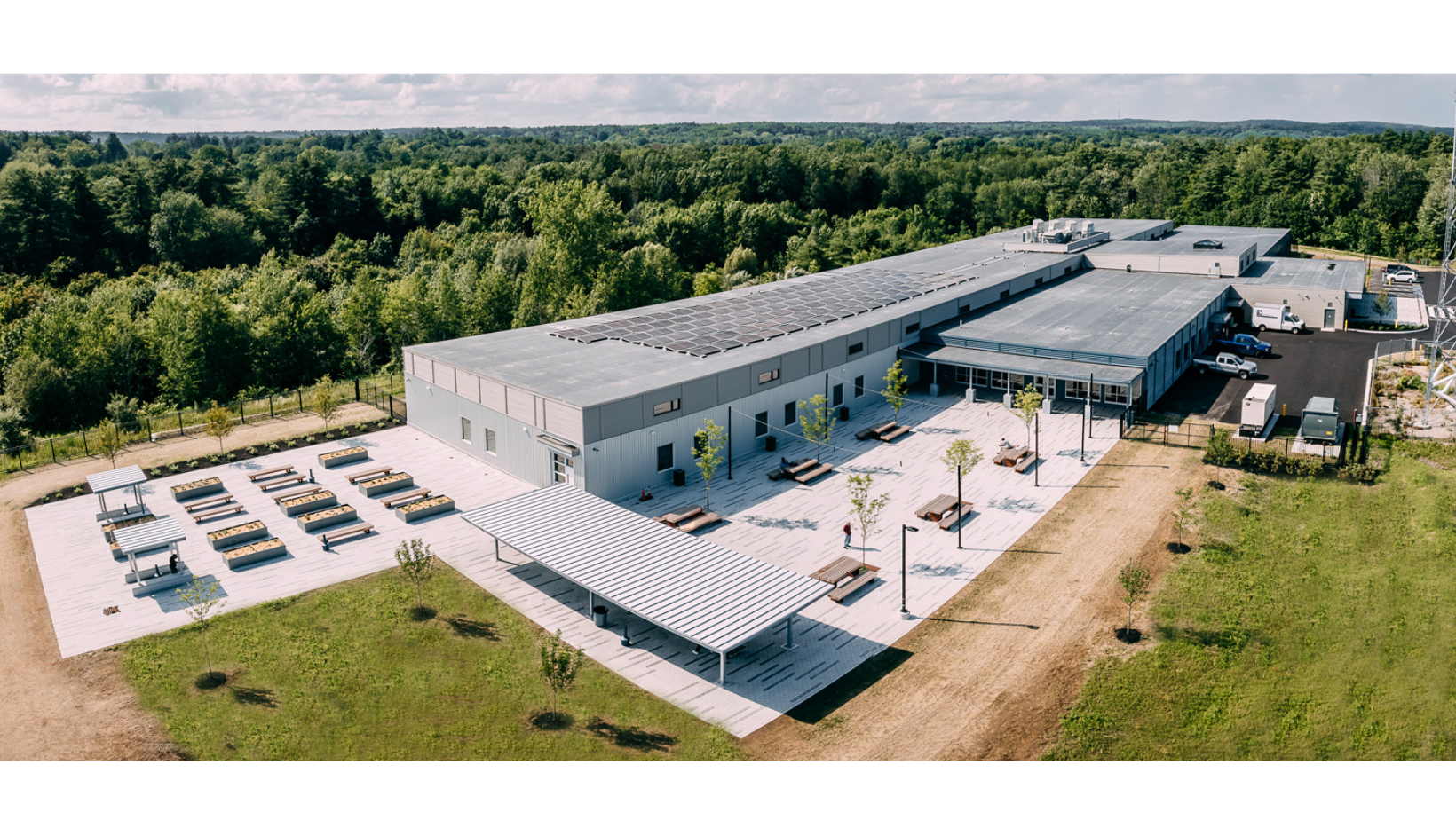
The new Riverside Homeless Services Center
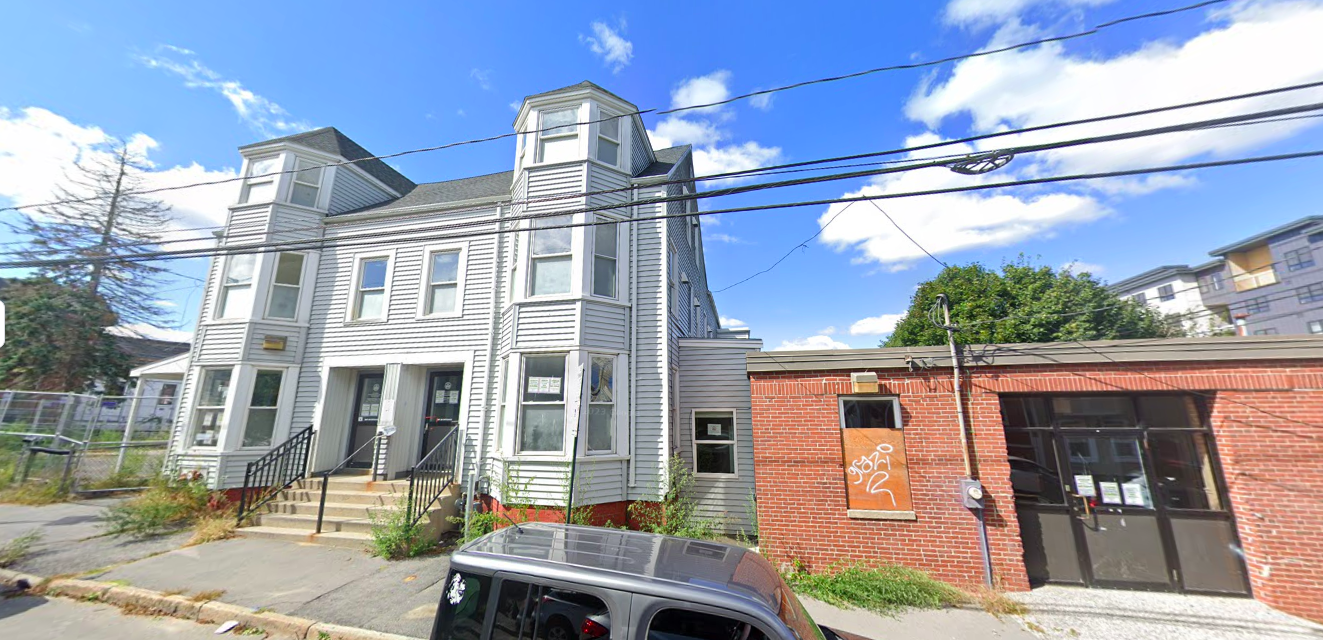
The now defunct Oxford Street Shelter

Support for $1 Million in funding for public bathrooms

The BNA understands how important safe, accessible public bathrooms are for people experiencing homelessness, and worked with city manager Jon Jennings in 2017 to add new, outdoor bathrooms at the Oxford Street Shelter, and during the pandemic in 2020 advocated for the new portable toilets that have been placed in locations convenient to social service delivery sites.

Now we are hoping our Senators will support additional safe, dignified bathroom facilities to benefit all Portland residents and visitors. 

We were asked to support the City’s request for $1 million in funding from the Senate Appropriations Committee. Our letter is below. We also supported a previous request to Representative Pingree for help from the House appropriations committee, which was sadly unsuccessful. 

Dear Senators King and Collins,

I am writing today to voice the Bayside Neighborhood Association’s wholehearted support for the City of Portland’s Community Project Funding request of $1,000,000 toward the new construction of safe, accessible public restrooms.

The BNA represents the Bayside neighborhood, greater Portland’s hub of social services and homeless shelters. More than perhaps any other neighborhood, Bayside understands the community harm that comes from a lack of accessible and safe public bathrooms.

For those experiencing homelessness, it’s not just an inconvenience, it’s a profound indignity that compounds their struggles. For the surrounding neighborhood, it’s an ongoing public health crisis, as Senator may recall from his tour of the Bayside neighborhood in 2018. For years, the unsanitary conditions on walking trails, playgrounds, private property, and sidewalks in front of homes and businesses have eroded quality of life and decreased business revenues.

That crisis only escalated with the arrival of the COVID-19 pandemic and subsequent closure of service providers and other public institutions, which were no longer able to admit community members for whom public restrooms are their only indoor option. The strain of the pandemic may ease, but the problems that existed prior will not be alleviated without funding to install clean, welcoming, and safe public bathrooms.

Providing humane bathroom access supports community members at all economic levels and grows strong, inclusive, and vibrant neighborhoods where everyone feels valued. The BNA respectfully requests that you support Portland and the Bayside neighborhood by submitting the City of Portland’s Community Project Funding request to the Senate Committee on Appropriations.

Sincerely,

Sarah Michniewicz
President, Bayside Neighborhood Association

Take the BNA Survey!

This survey has closed. Thank you to everyone who took the time to take our Visioning  survey and shared their thoughts at our community feedback sessions.

As the BNA considers its strategic direction for the next several years, we are seeking input from community members about your relationship to Bayside and what you would like to see in the neighborhood and specifically from the BNA in the future. This survey takes approximately 5 minutes to complete and your feedback is sincerely appreciated. Thank you for taking the time to let us know your thoughts!

BNA Spring Community Cleanup and Raffle

It’s time to do a little spring cleaning! Join your friends and neighbors on Saturday, April 23 2022 10AM – 12PM for snacks, a chance to win a gift certificate, and a big dose of community pride. All volunteers entered for a chance to win a gift certificate to a great Bayside business – Leavitt & Son’s Deli, Wilson County BBQ, Maine Oyster Company, Bayside Bowl, and Bayside American Cafe!

BNA Spring Cleanup 2022 (1)

BNA Supports Bayside shelter moratorium

On June 7 the City Council will vote on whether to pass a 180-day moratorium on new emergency shelters in Bayside in order to allow shelter licensing to be approved and enacted. This is our letter of support to the Council.

June 2, 2021

To Mayor Snyder and Members of the City Council,

The Bayside Neighborhood Association is in full support of Order 260-20/21 Establishing a 180-Day Moratorium on New Shelters in the Bayside Neighborhood.

We urge you to adopt this targeted, time-bound moratorium in order to ensure that appropriate, sensitive and beneficial shelter licensing may be developed and enacted, free of the pressure or confusion that a new shelter proposal would bring to bear on the process.

The history of Bayside’s poorly integrated social service cluster, developed in the absence of planning, policies, and public process, demonstrates why this moratorium, and licensing, are desperately needed:

• Between 1987 and 2000, the City’s emergency shelter relocated twice and steadily increased capacity from 20 beds to 154 at its present Oxford Street location. All three of the shelter’s locations have been in the Bayside neighborhood.


• The City’s present family and adult emergency shelters, with a combined total of 300 beds, are located within 100′ of each other in a dense R6 neighborhood where emergency shelters are not currently permitted.


• Over the past two decades or so shelters throughout the City closed and to compensate, multiple “temporary” overflow facilities, ultimately comprising over 200 beds, were allowed to open in close proximity to the City shelters and one another without meaningful council involvement, policy development, or community engagement. 


• Instead, these increases were recommended by the Emergency Shelter Assessment Committee, an independent group of social service providers, unaccountable to the City. It should be noted that the ESAC of today has not taken a position on this moratorium, nor did the majority of its member agencies, which suggests that in the opinion of some key stakeholders the proposed moratorium would not create any substantive issues or challenges to their work on behalf of individuals experiencing homelessness.


• During these expansions of services Bayside residents and businesses were not given the benefit of the public planning process that occurred elsewhere when shelters opened in other neighborhoods and the Downtown District.


• The conditional use standards for emergency shelters in effect up until 2017 only required that a shelter comply with the city’s housing assistance plan, and be registered with DHHS.


• Many ancillary services sprouted up in the general vicinity of the shelters. Some operated for years under questionable permitting and in a manner that caused excessive and unmitigated community impacts.
Bayside was one of the poorest and most neglected neighborhoods in the City for well over three quarters of a century. In the 1950s the neighborhood was subjected to “slum clearance” and resident displacement. As recently as the 1990s Bayside was identified by US News and World Reports as, by some measures, one of the worst neighborhoods nationwide.


• Segregating marginalized and vulnerable populations into already socioeconomically disadvantaged neighborhoods is a long-standing, intentional practice that’s now recognized as discriminatory, counterproductive, and inherently inequitable.


• Concurrent with the growth in the number of emergency shelter beds the levels of crime, from “low-level” to violent, increased within the boundaries of the Bayside neighborhood while remaining flat in the rest of the City, rising to and remaining at the current level of roughly 20% of the total police calls and 10% of EMS calls for service despite Bayside being 1% of Portland’s landmass and 5% of its population.

Everyone – neighbors, people seeking shelter, and Portland as a whole – has been shortchanged by this lack of planning, care and due diligence. The present urgent need to hit pause via a moratorium is the inevitable result of decades of deferred attention, not a knee-jerk reaction to current circumstances.

This moratorium will not impede or impose restrictions on the operations of any existing shelter, or on shelter planning, development or execution outside of Bayside. It will not harm people experiencing homelessness or delay their progress toward permanent housing. It will be terminated when appropriate licensing has been enacted to correct the historical and existing governance and planning gaps pertaining to emergency shelters in Portland.
 
What this moratorium will do is allow the City to move forward mindfully, holistically, and justly. It will solidify Portland’s commitment to equitability as it develops licensing to ensure fair distribution of facilities; effective delivery of services; and balanced and safe neighborhoods for all. It will allow Portland to fulfill its explicit and implicit obligations to constituents in neighborhoods where emergency shelters are serving people in need.

The BNA urges you to pass Order 260-20/21.

Respectfully,

Sarah Michniewicz
President, Bayside Neighborhood Association

Bayside Neighborhood Association Board of Directors

Amistad
Colette Bouchard
Dennis Ferrante
Amy Geren
Jim Hall
Alex Landry
Susan McCloskey
Carolyn Megan
Scott Morrison
Heidi Souerwine
Rob Sylvain
Deborah van Hoewyk

BNA Spring Community Cleanup & Raffle Roundup – thanks to all our volunteers and sponsors!

Saturday May 1 was a great day for the BNA Spring Community Cleanup! Thanks to everyone who showed up to give Bayside some love, and congratulations to our lucky raffle winners. Over two dozen old and new friends, neighbors, and their kids, took to the streets and gathered a whole truck’s worth of trash. Well done!

Special thanks to Ozzy at Coals Bayside for providing coffee and a space to meet; members of his staff who joined in the cleanup; and City of Portland, Maine Midtown Community Policing coordinator Jen Hickey, who helped make sure volunteers had gloves and bags and were signed up for the raffle, and afterward distributed the leftover snacks and water to Bayside neighbors in need.

We so appreciate our ever-generous raffle sponsors for the great gift certificates to:

Banded Brewing Co.

Coffee ME Up

Leavitt & Sons, Portland

And BNA board member Scott Morrison, who generously donated a gift certificate to Wilson County Barbecue

If you missed this cleanup, you can pitch in anytime by taking a few minutes to pick up around where you live. And of course in a few months we’ll be doing the BNA fall cleanup! We hope to see you then!

Advocating for trees in Bayside

Did you know – housing development projects in Portland are required to plant one tree for every unit of housing. Sometimes that’s more trees than there’s room for around the development, such as with the recent proposed development of 171 residential units at 52 Hanover Street in Bayside. 

When that happens, the developer pays a fee instead – $400 per unplanted tree – and that money goes into a fund for planting trees all around the City. At 52 Hanover, 29 trees will be planted, and $56,800 will go into the City’s general tree fund. That money won’t necessarily result in any new trees planted in Bayside. 


The BNA is asking the Planning Board to require that all the tree fund money from 52 Hanover Street  be allocated to only plant trees in Bayside. Bayside doesn’t have a lot of green spaces and many streets have few if any trees. We need all the help we can get!

The BNA sent the below letter, to the Planning Board for the March 23, 2021 public hearing on the 52 Hanover Street project. This is in conjunction with a broader effort to protect and enhance Bayside’s green spaces in order to ensure sustainability, equity and livability as the neighborhood changes and develops.

The BNA’s Letter to the Planning Board requesting tree fund allocation to Bayside

To Chair Mazer, Planning Board members, and Planning Department staff,

Regarding the Level III Site Plan, Subdivision and Conditional Use application for 52 Hanover Street, the most recently posted site plan proposes the planting of 21 street trees, and fees in the amount of $60,000 to be paid in lieu of planting the balance of 150 trees.

The Board of Directors of the Bayside Neighborhood Association (BNA) and the undersigned community stakeholders ask that as a condition of any potential approval, the totality of these funds be allocated for use exclusively within the Bayside neighborhood, bounded by Marginal Way, Franklin Street, Congress Street and Forest Ave. The applicant, Tom Watson, has expressed his wholehearted support of this condition.

Such a condition has precedent in a similar Planning Board decision on August 18, 2020 to restrict the street tree funds from Avesta’s 210 Valley Street project for use in the vicinity per staff’s Proposed Motions for the Board to Consider, page 17, XII. C. 2. – “The applicant shall contribute a fee in lieu of approximately $22,000 for the required 55 street trees, to be used for landscape improvements along the lower Western Promenade.”

Without your action the tree funds from 52 Hanover would go into the city-wide tree fund and would not necessarily benefit the neighborhood that would be home to this significant proposed development.

A quick look at the City’s tree map makes it clear that many Bayside streets are severely or completely lacking the greenery that is vital to creating and maintaining a healthy, livable neighborhood and a thriving, sustainable urban ecosystem. Poor and underserved urban neighborhoods with high minority populations, such as Bayside, are particularly likely to have few trees and green spaces, and are especially vulnerable to their absence and loss.

Other prior Bayside development contributions, amounting to tens of thousands of dollars, have gone to the general city tree fund, yet Bayside remains tree-poor. The neighborhood recently experienced the dramatic loss of several healthy, mature trees, removed to make way for a different development. Others were removed due to disease. Young replacement trees have died of post-planting neglect.

The BNA is planning a street tree survey and will work with the City arborist to identify opportunities for tree planting. Should project approval be granted for 52 Hanover Street, we ask that you help ensure the future of Bayside’s trees by allocating the required tree fund fees solely for use in Bayside.

Thank you,

Sarah Michniewicz
President, Bayside Neighborhood Association

Bayside Neighborhood Association Board of Directors
Amistad
Colette Bouchard
Dennis Ferrante
Amy Geren
Jim Hall
Alex Landry
Susan McCloskey
Carolyn Megan
Scott Morrison
Heidi Souerwine
Rob Sylvain
Deborah van Hoewyk

Community Members & Organizations
Chris Aceto
Herb Adams
Ellen Bailey, President, East Bayside Neighborhood Organization
Marylee Bennison
Andrew Bove
Bayside Bowl
Laura Cannon
Cynthia Cochran, VP, East Bayside Neighborhood Organization
Nathalie Davidson
Deborah Fell
Jonathan Fenton
Fork Food Labs
Michael Gelsanliter
John Herrigal
Adam Hill
Ian Jacob
Avery Kamila
Sean Kerwin
Molly Ladd
Peter Leavitt, Leavitt and Sons Deli
Mary Beth Morrison
Jacqueline Newell
Nomadic Goat
Elizabeth Parsons, past president, West End Neighborhood Association
Ned Payne
Anne Pringle
Andrew Rosenstein
Karen Snyder
Nathan Szanton, The Szanton Company
Hilda Taylor
Steve Thomas
Jason Tropp
Laura Underkuffler

Mission Statement

The Bayside Neighborhood Association (BNA) brings members of the Bayside community together. BNA brings conversations about Bayside to Bayside and to the greater community in a way that organizes, informs, and empowers residents; social service and other organizations; local businesses; and city representatives to form meaningful and long-term partnerships. BNA preserves and promotes safety, multi-cultural diversity, housing, and carefully planned social, economic, and physical development in this unique urban community.

Bayside Community Garden General Policies 2024

Updated April 27, 2024 

Welcome to The Bayside Community Garden

The Bayside Community Garden was established at 78 Chestnut Street in 2001 as a project of the Bayside Neighborhood Association. The BCG is unique in being Portland’s only community garden run by a neighborhood association, receiving no material support or funding from the City. For over twenty years the BNA, its gardeners, and its supporters have poured their heart and souls into keeping this rare Bayside green space going despite a challenging urban environment and the mounting pressure of incoming development.

The goal of these policies is to ensure the Bayside Community Garden (BCG) enhances the livability and equality of the Bayside neighborhood and provides a well-managed and inviting green space for all who use and visit it for years to come.  

Participation

As a true community garden, all Bayside Community Garden plot holders are required to assist in maintenance, operations and/or management of the garden under direction of the garden steering committee and garden coordinator and in accordance with garden policies. Information on the steering committee structure and roles may be found here.

All gardeners and non-plot holding volunteers are required to fill out this form at the beginning of each season attesting they have read and accept these policies before beginning to work in the garden. 

Community Standards

Treat other gardeners and garden guests with as much kindness and respect as you do the plants you tend. Report any concerns to the garden coordinator or BNA liaison.

Plot Assignment

The mission of the BCG includes increased food security for lower income Bayside residents, especially new Mainers; and providing community access to green space, which the neighborhood severely lacks. This policy acknowledges and seeks to address those systemic inequities.

Anyone in the community and other neighborhoods may apply to hold a garden plot or to volunteer without holding a plot. 

Bayside residents are given first refusal of available plots and are put at the top of the waitlist. There are generally enough plots available to accommodate gardeners who wish to work a plot. 

Planting Schedule

June 1 – Plots must be cleared and initial planting completed.
June 15 – Planting for first crops must be complete.
July 1 – A plot must show that it has been consistently maintained.
November 1 – All plots must be cleaned out and shut down for winter.

If a plot appears abandoned by July 1, the fee will be forfeited and the plot will be offered to the next person on the waitlist at ⅔ the fee being charged at the time the plot is forfeited. If there are no takers, the plot will be cleared and/or used by the BNA at its discretion.

Plot Maintenance

All plots must be consistently maintained for the entire gardening season and closed down appropriately for the off-season. 

Trash in and around an individual plot must be removed by the plot holder as soon as possible and disposed of appropriately along with the trash collected from common areas.

All plantings, structures and signage must be kept within assigned plots. Plot perimeters outside of the physical box must be consistently trimmed and maintained by the plot holder or designated volunteer. 

The growing of marijuana and invasive plants is prohibited.

Common Area Maintenance

All common areas outside of individual garden plots must be kept neat, trimmed and maintained and invasive plants must be controlled throughout the growing season according to a schedule developed by the operations manager. 

Paths around and between beds must be kept free of plants, structures, overgrowth, etc. for safe and unobstructed passage and be covered with wood chips to control weed growth.

In order to ensure safe and fair use of common areas, intentional plantings outside of garden plots are only allowed with approval by the BNA Board.  Unauthorized plantings outside of approved areas may be removed. 

The berm between the compost bins and the road (Hall Court) and surrounding vegetation must be consistently maintained to prevent growth of weeds, vines, etc. Plants at the side of the road and the fence line by the sidewalk must be kept trimmed back.

General trash removal should happen on a daily basis as gardeners tend their own plots; a designated volunteer may be appointed to oversee this task.  

Regular trash bags should be used and may be deposited in either the dumpster behind the former shelter at 203 Oxford Street or the one next to the ramp in the parking lot across from Hall Court on Cedar Street. 

Large or bulky trash items left in the garden such as shopping carts should be brought to the attention of the garden coordinator, who will arrange for their removal. 

Trash must also be regularly monitored and removed during the off season between November and May. 

Graffiti, vandalism, or dumping of trash should be reported immediately to the Garden Coordinator. 

Signage

Multilingual signs may be posted indicating that touching or picking plants without permission is discouraged.

Respectful signage may be displayed by gardeners within their own plots if they wish to discourage picking of their plants. 

General garden signage and plantings outside of assigned plots must be approved by the garden coordinator.

“Keep Out” signs may be maintained at either end of the raspberry stand as this area has previously attracted tent encampments.

Community Access 

The garden is open to everyone to visit and enjoy between dawn and dusk. 

Touching or picking of gardeners’ plants without permission is discouraged – however, as the garden is a publicly accessible space, gardeners may experience loss of plantings, structures or items left in the garden. If excessive loss or vandalism of plants or garden structures or fixtures is noted, please alert the Garden Coordinator.

Dogs must be kept on leash and waste picked up. Signage to this effect, or restricting dogs from the garden, may be considered if this becomes a problem.

Illegal or disruptive activity and drug or alcohol use is not allowed by gardeners, volunteers or garden visitors. 

No tenting, camping, or related activities are allowed. If a campsite is discovered, please alert the garden coordinator or call the Police non-emergency dispatch at (207) 874-8575 to request their behavior health team make contact with the campers and connect them with appropriate services. 

Please note – the garden is located on private property; not owned by the BNA; and not subject to the City encampment policy. Reasonable attempts will be made to find the people associated with a campsite, but in no case will an encampment or belongings be allowed to remain indefinitely on garden property.

Health and Safety 

Any found hypodermic syringes or other hazardous or questionable materials should be reported to the Garden Coordinator, who will address them appropriately. 

*Gardeners who choose to deposit syringes in the needle box attached to the garden shed do so at their own risk. Using gloves or using a trash grabber is best practice.

Immediate safety or wellbeing concerns on the property should be addressed by calling Police non-emergency dispatch at (207) 874-8575 or 911 as appropriate. The address to reference is 78 Chestnut Street.

Please know that the Portland Police Department has a robust and experienced civilian behavioral health and alternative response unit which is dispatched when indicated for mental health and substance use concerns. They work closely with social service providers to connect people with needed resources.

End of Season

Garden plots and common areas must be closed down by November 1 unless otherwise permitted. If you have decided not to return please clear your plot so it’s ready for the gardener. that comes after you.

Individual Plots

Garden plots must be closed down by November 1 unless otherwise indicated by the garden coordinator.

Plants that remain for the next season must be trimmed back to 2’ or less and the plot raked clear of plant matter and debris. Remove all loose items and anything that may be taken, blown away, or damaged by winter weather. When possible lay fencing and other structures flat within the bed of the plot.

Make a plan for discarding unwanted plants, fencing, stakes, etc. No items may be left outside the plot or abandoned in the common areas of the garden. Remove all trash and debris from common areas.

A volunteer must be assigned to regularly remove trash from plots and common areas over the winter until the following planting season.

Common Areas

Common areas must be left in an orderly state by the teams assigned to particular tasks, such as the compost piles, tool maintenance, berm maintenance, wood chip pile, hose management, etc.